





Education Facilities Management Software

Standardise planned maintenance across education estates with SFG20. Our education facilities management software gives estates teams access to structured, customisable maintenance schedules that support compliance, improve consistency and help keep buildings safe and reliable for learning.

Use Facilities-iQ to manage the SFG20 Standard directly, or connect SFG20 maintenance content with your existing CAFM, CMMS or IWMS platform.

Schedule a live demo

See how our software works, explore a real schedule, and get answers to your questions.

How does SFG20 help education?

SFG20 is the industry standard for building maintenance specification, defining what needs maintaining, how often and by whom. Accessed through Facilities-iQ, it helps education organisations create consistent, site-specific maintenance regimes, prioritise statutory, optimal and discretionary tasks, and review schedule updates as requirements change. Facilities-iQ can be used directly to manage maintenance or integrated with downstream operational systems.

Ensure HTM compliance

Support compliance across education estates

Use expert-written, colour-coded schedules to distinguish statutory tasks from optimal and discretionary work, helping teams prioritise legal obligations and operationally important maintenance.

Protect patient safety

Maintain safe and reliable learning environments

Plan maintenance for essential building services and assets to help reduce safety risks, service failures and disruption across teaching, support and communal spaces.

Regulatory updates

Stay current with schedule updates

Receive automated notifications when SFG20 schedules change, compare previous and revised content, and apply accepted updates to your maintenance regimes.

Distinguish statutory tasks

Coordinate teams and contractors

Provide clear task instructions, frequencies, duration and required skill levels so in-house teams and service partners work from a consistent maintenance specification.

Standardise

Strengthen audit and governance reporting

Create a structured, auditable view of maintenance requirements, task priorities and schedule changes to support internal governance, budget planning and compliance reviews.

Group 48098847 1

Reduce unplanned reactive maintenance

Replace fragmented PPM lists and inherited assumptions with a planned, site-specific maintenance regime aligned to your assets, operating environment and organisational priorities.

Search or browse the library
vector12
MAINTENANCE SCHEDULES

Search or browse 1,500+ schedules

Access more than 1,500 customisable schedules covering the building services and assets found across education estates. The library includes HVAC, electrical systems, fire safety, water hygiene, lifts, security, catering equipment, building fabric and other essential services.

Each schedule defines task instructions, frequency, duration, criticality and required skill level, giving estates teams a consistent basis for planned maintenance.

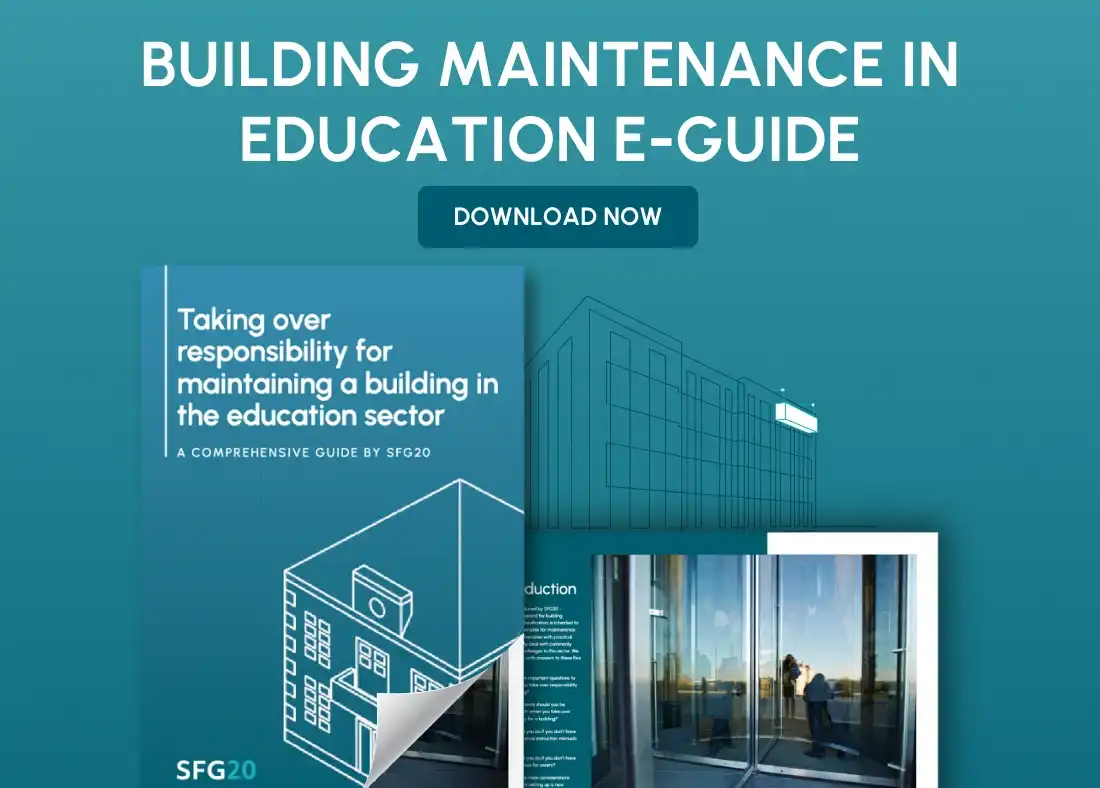
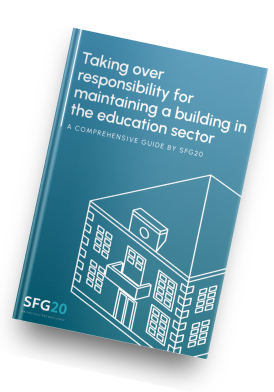
Download your free guide to taking over building maintenance in education

Taking responsibility for an education estate can mean inheriting unfamiliar assets, existing contractor arrangements and maintenance records of varying quality.

This practical guide provides a step-by-step framework for understanding maintenance requirements, establishing priorities and creating a more controlled transition. Learn how to assess your starting position, identify important tasks and put a structured maintenance regime in place.

Education e-guide
Education 1

Managing schools or multi-academy trusts?

Explore maintenance software and guidance developed around the challenges facing school and trust estates.

Managing a university or higher-education estate?

Discover how SFG20 supports complex campuses, specialist buildings and multi-site higher-education estates.

FAQS

Frequently asked questions

What is education facilities management software?

Education facilities management software can help estates teams define and organise maintenance requirements, asset information, responsibilities and schedule work across an education estate.

Facilities-iQ allows users to access the latest version of the SFG20 Standard. It can be used to create and manage maintenance regimes and integrates with CAFM, CMMS and IWMS platforms for seamless connectivity.

What does education facilities management include?

Education facilities management covers the planning and coordination needed to keep buildings, services and assets safe, compliant and operational.

Responsibilities may include planned preventative maintenance, statutory inspections, contractor management, asset information, fire safety, water hygiene, HVAC, electrical systems, security, building fabric and other services relevant to the estate.

How does SFG20 support compliance in education?

SFG20 schedules define maintenance tasks, frequencies, required skills and criticality. Colour coding helps teams distinguish statutory tasks from optimal and discretionary activity, while update notifications allow organisations to review changes and keep their regimes current.

Does SFG20 replace a CAFM, CMMS or IWMS platform?

No. Facilities-iQ can be used to access the latest version of the SFG20 standard, create and manage maintenance regimes and connect with CAFM, CMMS or IWMS software via an API to allow schedule updates to flow into downstream systems, eliminating the requirement for manual intervention.

Can SFG20 schedules be tailored to different education sites?

Yes. Facilities-iQ allows organisations to tailor schedules to their assets, operating conditions and site-specific priorities.

Task details such as frequency, duration, skill requirements and notes can be adapted where appropriate.

How does SFG20 support multi-site education estates?

SFG20 provides a consistent maintenance specification that can be applied across multiple sites, teams and contractors. Individual regimes can be tailored to reflect differences in assets, building use and operating conditions.

This allows organisations to standardise their underlying approach without assuming that every site has identical maintenance needs.