




Facilities maintenance management for every industry

SFG20 has a comprehensive and expansive library of maintenance schedules available to help you build a maintenance plan bespoke for your specific needs.

Whatever sector you operate in, whether it’s transport, utilities, retail, leisure (or anything in-between) SFG20 can help you manage your maintenance activities to ensure that you remain compliant and have customer and employee safety at the forefront of your business.

Schedule a live demo

See how our software works, explore a real schedule, and get answers to your questions.

How does SFG20 help FM professionals?

Whether you operate a single site or manage a national portfolio, SFG20 transforms reactive maintenance into strategic asset management - ensuring compliance, protecting occupants, and demonstrating the professional facilities management standards expected by stakeholders, regulators, and customers across any business sector.

Coin

Proactive maintenance: Prevent downtime, save costs

SFG20 can be used to optimise your maintenance strategy, prompting timely and preventive maintenance tasks to minimise downtime and reduce the likelihood of costly emergency repairs. In addition, SFG20 guidance ensures your assets are kept well maintained, giving them a greater chance of lasting their full intended lifespan.

Group 48098847

Streamline maintenance management: Prioritise resources, centralise your information

SFG20's facilities maintenance software simplifies and optimises maintenance operations for organisations of all sizes. Our software helps to prioritise and focus resources where they're most needed, creating a streamlined approach to maintenance that can save time, reduce maintenance costs, and provide reliable data to stakeholders.

Group 48098660

Compliance assurance: Peace of mind, enhanced reputation

Industry-specific compliance and adherence to relevant standards and codes of practice safeguard your operations, protect your organisation's reputation, and minimise potential risks.

Download your free copy of “Building Maintenance: Top 5 risks of non-compliance"
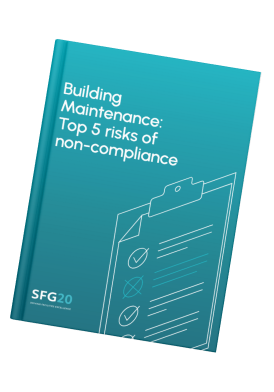
This e-book explores the top five risks of non-compliance, offering insights on how to mitigate them through proactive maintenance and effective compliance management.

Download our free guide and gain the tools to enhance maintenance practices in your facility.

Top 5 risks
GUIDES & RESOURCES

Useful guides & resources
sfg20 logo resource thumbnail
Understand and Apply the SFG20 Standard

SFG20 defines the industry standard for building maintenance specification, and provides the software and expert services to apply it effectively, cut costs, and stay compliant.

Read now ›
Mobiliser and Facilities iQ
How SFG20 Mobiliser Works Alongside Facilities-iQ: A User's Guide

Introducing SFG20 Mobiliser, an industry changing AI-powered tool which can be used alongside Facilities-iQ.

Read now ›

Mobiliser blog thumbnail
What is SFG20 Mobiliser? The Benefits and How it Works

Understand how SFG20 Mobiliser, an AI-powered software module which can be used alongside Facilities-iQ, can solve this industry wide problem and bring enormous benefits to you and your team.

Read now ›
FAQS

Frequently asked questions

What is Planned Preventative Maintenance (PPM)?

We will begin in this chapter by dealing with some general quantum mechanical ideas. Some of the statements will be quite precise, others only partially precise. It will be hard to tell you as we go along which is which, but by the time you have finished the rest of the book, you will understand in looking back which parts hold up and which parts were only explained roughly.

What is Maintenance Planning?

Maintenance planning is the process of organising and scheduling maintenance activities to ensure the reliability and availability of equipment and systems. It involves identifying, planning, and scheduling maintenance tasks, as well as coordinating resources, ensuring quality control, and documenting the process.

Why is Maintenance Planning Important?

Prevent unplanned downtime: By scheduling and prioritising maintenance tasks, unplanned breakdowns can be minimised, reducing disruptions to operations and production.

Maximise equipment lifespan: Regular maintenance helps identify and address potential issues before they cause major damage, maximising the lifespan of equipment and reducing the need for costly replacements.

Improve asset utilisation: Planning and scheduling maintenance activities ensures that equipment is utilised efficiently, maximising productivity and reducing downtime losses.

Ensure compliance: Maintenance planning helps organisations ensure that they are completing all statutory maintenance tasks to remain compliant.