Bournemouth University’s CAFM team shares how SFG20’s Professional Services team surveyed maintainable assets across 19 buildings, adapted the data to meet the university’s system requirements and created a reliable foundation for revised planned preventative maintenance schedules and long-term budget forecasting.
About Bournemouth University's Estate
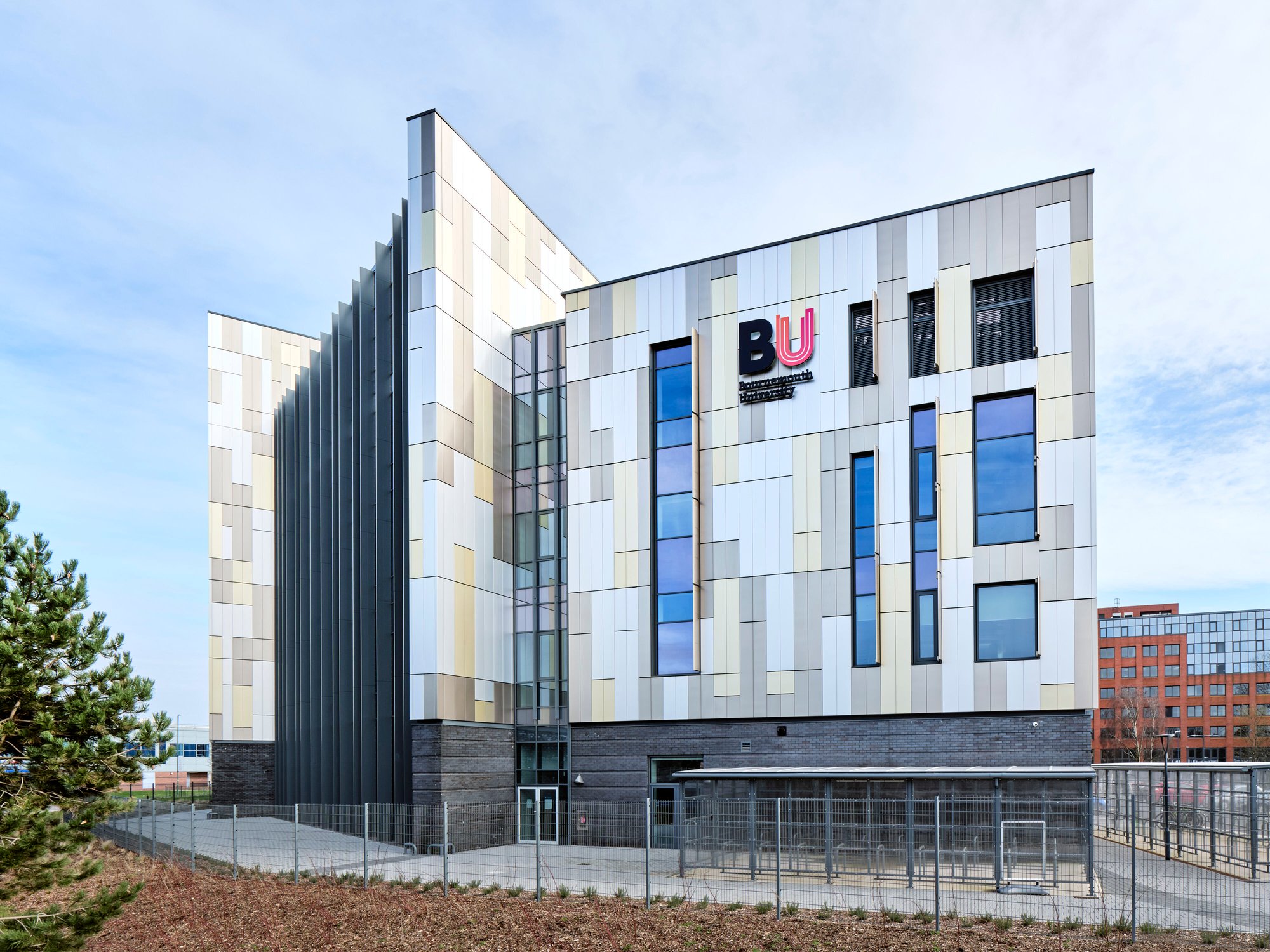
The project covered 19 buildings across Bournemouth University’s estate, including Poole House, Fusion Building, Sir Michael Cobham Library, the Student Centre, the Executive Business Centre, Bournemouth Gateway Building and The Old Fire Station.
Across these buildings, the university needed a consistent and accurate understanding of its maintainable equipment. This would give the facilities team a stronger foundation for managing assets, developing revised maintenance schedules and planning future investment.
Who is Russell Holmes?
Russell Holmes is a Systems Development Officer for CAFM at Bournemouth University. He worked closely with the SFG20 Professional Services team to review the survey output, align it with the university’s Q2 import requirements and prepare the asset data for the next stage of its maintenance-planning programme.

What Did Bournemouth University Need From The Project?
Bournemouth University commissioned SFG20 to carry out a survey of the agreed maintainable asset scope across 19 buildings.
The project was designed to give the university a more accurate and structured view of assets such as pumps, boilers, distribution boards and other maintainable equipment. For each relevant asset, the team was asked to:
- Record its condition.
- Allocate and apply an asset tag where appropriate.
- Take digital photographs to establish a visual record of the asset and its condition.
- Capture information such as the asset name, number, location, manufacturer and model, where available.
- Map the assets to the relevant SFG20 maintenance schedules.
- Produce an asset register for each building
The scope focused on maintainable equipment within the agreed survey and access parameters. Building fabric and fire doors were excluded, while available historical information could be used to supplement the physical survey where agreed.
Why Did the Project Begin With a Proof of Concept?
Rather than immediately applying one format across all 19 buildings, Bournemouth University and SFG20 first mapped the university’s requirements against the SFG20 survey template. Weymouth House was then selected as a proof-of-concept building.
This initial exercise highlighted additional requirements from the university’s CAFM import process. The SFG20 team worked with Bournemouth University to adapt the data structure before extending the approach across the wider estate.
Starting with a proof of concept allowed the final output to reflect not only what could be collected during the survey, but also how the university needed to use that information afterwards.
How Did SFG20 Carry Out the Wider Asset Survey?
Once the proof-of-concept approach had been agreed, the SFG20 Professional Services team progressed through the remaining buildings, recording the assets found within the agreed scope.
The work included asset identification, tagging, condition assessments, photographs and the creation of a structured asset register. Repeated assets such as light fittings and supply or extract grilles could be recorded as grouped line items with quantities, while individually maintainable equipment was captured in greater detail.
The draft asset register was populated with the assets identified across all 19 buildings. Asset tags that could not be physically attached at the time of the survey were allocated for application during a subsequent maintenance visit.
How Was the Data Adapted for Bournemouth University's Systems?
The collaboration continued after the physical survey.
As Bournemouth University reviewed the data for transfer into its importer template, the team identified additional lifecycle and classification information that would improve its usefulness. SFG20 worked directly within the shared document to populate and refine fields including:
- Installation year.
- Whether the installation year was actual or estimated.
- Asset condition.
- CIBSE Guide M life expectancy, where applicable.
- Replacement year bands.
- NRM and Uniclass classifications.
The SFG20 team also reviewed asset numbering, removed duplicate asset numbers, added assets identified during a return visit and clarified where particular fields were not applicable or could not be reliably confirmed.
This responsive approach meant the final dataset was shaped around the university’s operational requirements rather than simply handed over in a standard format.
What Value Did Bournemouth University See From the Service?
One of the most immediate benefits was the reduction in manual data preparation.
By mapping the additional information into Bournemouth University’s required columns, the SFG20 team saved the university from having to complete a considerable amount of that work itself. The resulting dataset gave the university the information it needed to prepare the asset register for upload into its Q2 system.
“What impressed me most was SFG20’s willingness to work with us beyond the survey itself. As we prepared the data for import into our CAFM system, the team were flexible, responsive and happy to adapt the outputs to meet our requirements. The inclusion of information such as Uniclass classifications and asset types gave us a strong starting point and saved a considerable amount of work.” Russell Holmes, Systems development Officer (CAFM) at Bournemouth University.
“Like any project of this scale, there was still effort required on our side to review, structure and refine the data for our own processes, but the follow-up support from SFG20 was invaluable. The team worked collaboratively with us to answer questions, resolve issues and ensure we ended up with a dataset that was genuinely useful rather than just a list of assets.”
How Will the Asset Data Support Future Maintenance Planning?
The asset register is intended to give Bournemouth University a more reliable starting point for building revised PPM schedules.
Once transferred into the university’s systems, the data will help connect each asset with clearer maintenance requirements and provide a more consistent basis for planning work across the estate.
The university is also using the condition and lifecycle information collected through the project to forecast maintenance schedules and budgets as far as 30 years ahead.
This turns the asset register from a static list into a practical planning resource that can support both near-term maintenance delivery and longer-term investment decisions.
“Working with the SFG20 team was a genuinely positive experience. The survey gave us a level of asset information that would have been extremely difficult to gather ourselves across such a large and diverse estate. I would happily recommend SFG20 to other organisations considering an asset survey. The team were professional, knowledgeable and easy to work with throughout, and the information gathered has given us a much stronger foundation for asset management, maintenance planning and future investment decisions.” -Russell Holmes, Systems development Officer (CAFM) at Bournemouth University.