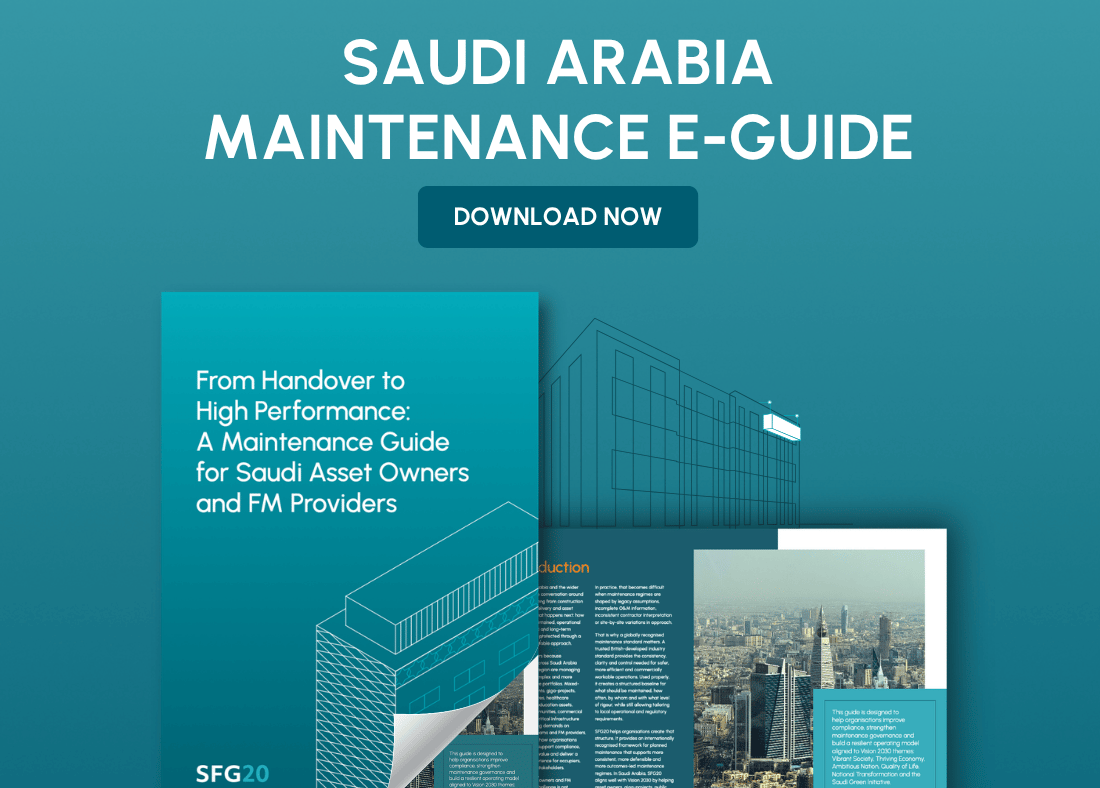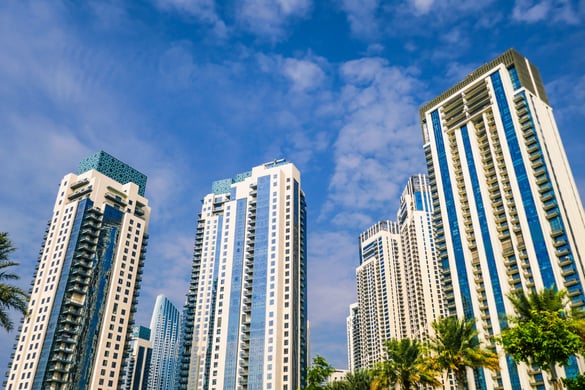
As Saudi Arabia's FM sector matures in step with Vision 2030, Muheel Facilities Management has partnered with SFG20, the industry standard for building maintenance specification, to embed structured, auditable maintenance governance across one of the region's most diverse and rapidly growing FM portfolios.
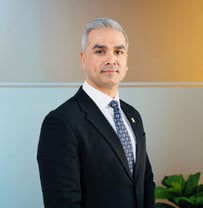
We spoke with Muhammad Irfan Khokhar, CEO at Muheel to explore how the partnership with SFG20 supports Muheel’s wider digital FM strategy, helps them to set a new standard of maintaining world-class buildings across Saudi Arabia, and reflects his view on how facilities management in the Kingdom is evolving.
Scaling Consistency Across a Complex and Growing Portfolio
Saudi Arabia's FM sector is experiencing a period of significant transformation, with the market now valued at more than US$30 billion, alongside one of the largest construction and development pipelines anywhere in the world.
As increasingly complex, technology-intensive and high-value assets transition from construction into operation, expectations on FM are rising. The industry is moving away from predominantly reactive and labour-intensive models towards more integrated, technology-enabled and performance-led delivery. Clients are also increasingly looking beyond manpower and task completion towards compliance, reliability, energy performance, user experience and lifecycle value.
For Muheel Facilities Management, operating across more than 23 cities and serving a portfolio spanning commercial, residential, hospitality, healthcare, education, government, industrial and energy environments, retail and more, the challenge is not simply one of scale, but of maintaining consistency while responding appropriately to different asset types, risks and client requirements.
"The key challenge is preventing uncontrolled variation while recognising that different assets and operating environments legitimately require different maintenance strategies," explained CEO Muhammad Irfan Khokhar. "Consistency ultimately comes from the combination of good data, competent people, clear accountability and disciplined execution at site level."
A Recognised Standard Embedded in Operations
SFG20 provides structured maintenance guidance on tasks, skillsets and frequencies, giving Muheel a consistent technical baseline that can be adapted to local requirements and asset needs. covering what work should be undertaken, the appropriate skillset and recommended frequencies.
Tailoring allows the baseline to reflect site-specific risks and operating requirements while retaining applicable statutory, OEM, warranty and contractual obligations.
Informal or inconsistent maintenance approaches result in both under-maintenance and over-maintenance. Critical activities can be missed, unnecessary tasks can consume resources, reactive failures may increase, and evidence may be insufficient when assurance around compliance is required.
Muheel partnered with SFG20 establish a recognised and scalable maintenance framework that can support a growing and increasingly diverse portfolio while fitting into its wider digital FM strategy. The company is integrating that technical baseline with its CAFM Platform, MRI Evolution to support the management and evidencing of planned maintenance work.
“We wanted a recognised and scalable maintenance framework that could support a growing and increasingly diverse portfolio while fitting into our wider digital FM strategy.” Muhammad Irfan Khokhar told us.
“SFG20 provides the maintenance standard, MRI Evolution provides the digital environment through which the work can be managed, and Muheel provides the technical governance, engineering judgement and operational capability required to apply it effectively in Saudi Arabia.”
Supporting Governance, Transparency and Defensible Maintenance
Although their CAFM integration with MRI Evolution is still being rolled out, the value of the approach is already evident in how Muheel are able to talk to clients about maintenance governance, and in how it is positioning itself in a market that is moving rapidly towards outcome-based FM.
"SFG20 gives us a common technical reference, rather than requiring each site to develop maintenance schedules independently. When it is linked to the asset register and MRI Evolution, we can create a clear connection between the asset, the approved maintenance regime, the work order, the completed task and the evidence. This makes maintenance more consistent, transparent and easier to audit."
For Muheel, SFG20 provides a reference point, but it is not applied in isolation. It sits alongside Saudi statutory requirements, OEM recommendations, warranty conditions, asset criticality, the operating environment, client requirements and engineering judgement.
“The objective is therefore not blind standardisation. It is controlled standardisation, where departures from the baseline are technically justified and governed.” Irfran stated.
From Framework to Operational Rollout
Muheel is taking a phased approach to implementation: establishing the data foundation, completing the initial mapping and configuration, validating the model through pilots, training teams and then moving into a controlled rollout. The pilots are intended to test the quality of asset information, the practicality of maintenance mapping and workflows, the proportionality of evidence and supervisor controls, and user acceptance.
The company also intends to remain evidence-led. Any claims around cost optimisation, energy performance, reliability or asset-life extension should ultimately be demonstrated through verified operational data.
The Wider Strategic Vision
Muheel’s wider strategic objective is to move beyond simply demonstrating that they have access to a recognised standard.
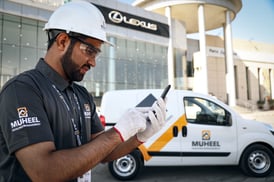
Their ambition is to create a clear connection between the asset, the appropriate maintenance regime, the work performed, technician competency, the evidence captured and ultimately the performance of that asset. Over time, this will help to give them the foundation to move beyond task completion towards a more risk-based and outcomes-focused maintenance model.
“That is why we see SFG20 as part of our operating framework rather than as a reference document or compliance badge.”
The Future of the Wider FM Market in Saudi Arabia
Muhammad Irfan Khokhar highlighted that SFG20 can help the Saudi Arabia FM market move away from fragmented maintenance schedules towards a more structured approach, and to create a more common technical language for maintenance between asset owners, consultants and FM providers.
“A recognised baseline makes it easier to challenge maintenance requirements objectively, identify where risk sits and distinguish between justified technical variation and simple inconsistency. Muheel's role is to demonstrate how an international maintenance framework can be applied practically within the Saudi operating and regulatory environment.”
The longer-term direction is not simply to digitalise PPM. It is to build the information and governance needed to make better asset decisions, support lifecycle planning and progressively move towards maintenance strategies informed by risk, condition and actual asset performance.
“In the KSA, FM is no longer simply about maintaining buildings and delivering services. It is increasingly about protecting asset value, managing risk, enhancing people's experience of the built environment and enabling our clients' wider objectives. Partnerships such as SFG20 support that direction." – Muhammad Irfan Khokhar, Chief Executive Officer at Muheel Facilities Management
Download the full story below to learn more about how Muheel is approaching maintenance governance, CAFM integration and operational rollout across Saudi Arabia.