


Wayne Dibsdall, Head of Estate Services, and Harry Teale, Estate Services Support Manager at the Royal Shakespeare Company, shine a light on how SFG20 and their integrated CAFM system Opuz have transformed their FM operations across one of the UK's most widely recognised and culturally significant theatre estates.
About the Royal Shakespeare Company
The Royal Shakespeare Company (RSC) is a leading global theatre company that sparks local, national and international conversations that build connections, create opportunities and bring joy.
They passionately believe that great storytelling can change the world, and that theatre offers its own unique form of storytelling: it is live and shared, and transforms a group of strangers into an audience which, together, experiences a story come to life in front of its eyes.
The RSC collaborates with the most exciting artists to tell the stories of our time, and through a range of programmes nurture the talent of the future. They perform on three stages in their home in Stratford-upon-Avon, in London and in communities and schools across the country and around the world.
Their transformative Creative Learning and Engagement programmes reach over half a million young people each year.
The RSC facility management team maintains approximately 16 commercial properties and 67 residential properties/bedsits including public and private gardens, with the vast majority being in Stratford-upon-Avon, alongside properties in London.
Who are Wayne Dibsdall and Harry Teale?

Wayne Dibsdall is the RSC’s Head of Estate Services, responsible for all maintenance, contracts, utilities, compliance, as well as end-of-life asset management, disposal and upgrades.

Harry Teale is the RSC’s Estate Services Support Manager, with her main role being running their CAFM system Opuz. She also leads on their Helpdesk function and works closely with the maintenance team.
“One of the biggest areas for us is handling the life of assets from cradle to grave, so that means budgeting year on year, conducting condition surveys and more.” Wayne told us.
“We’re also heavily involved in supporting net zero, specifically looking at ways of decarbonising buildings and offering advice to colleagues around the organisation. On top of this, we're responsible for contract management and work closely with project teams when it comes to specification, building commissioning, technical support and tendering. So we both have very diverse roles.”
What Makes Maintaining a Theatre Environment Different From a Typical Commercial Building?
Due to its dual nature of being both front-facing and backstage, the RSC makes for a uniquely demanding maintenance environment, and as a visitor-facing organisation, the estate is a critical part of the overall visitor experience.
“As it’s such a mixed-use environment, there can often be competing demands.” Harry shared.
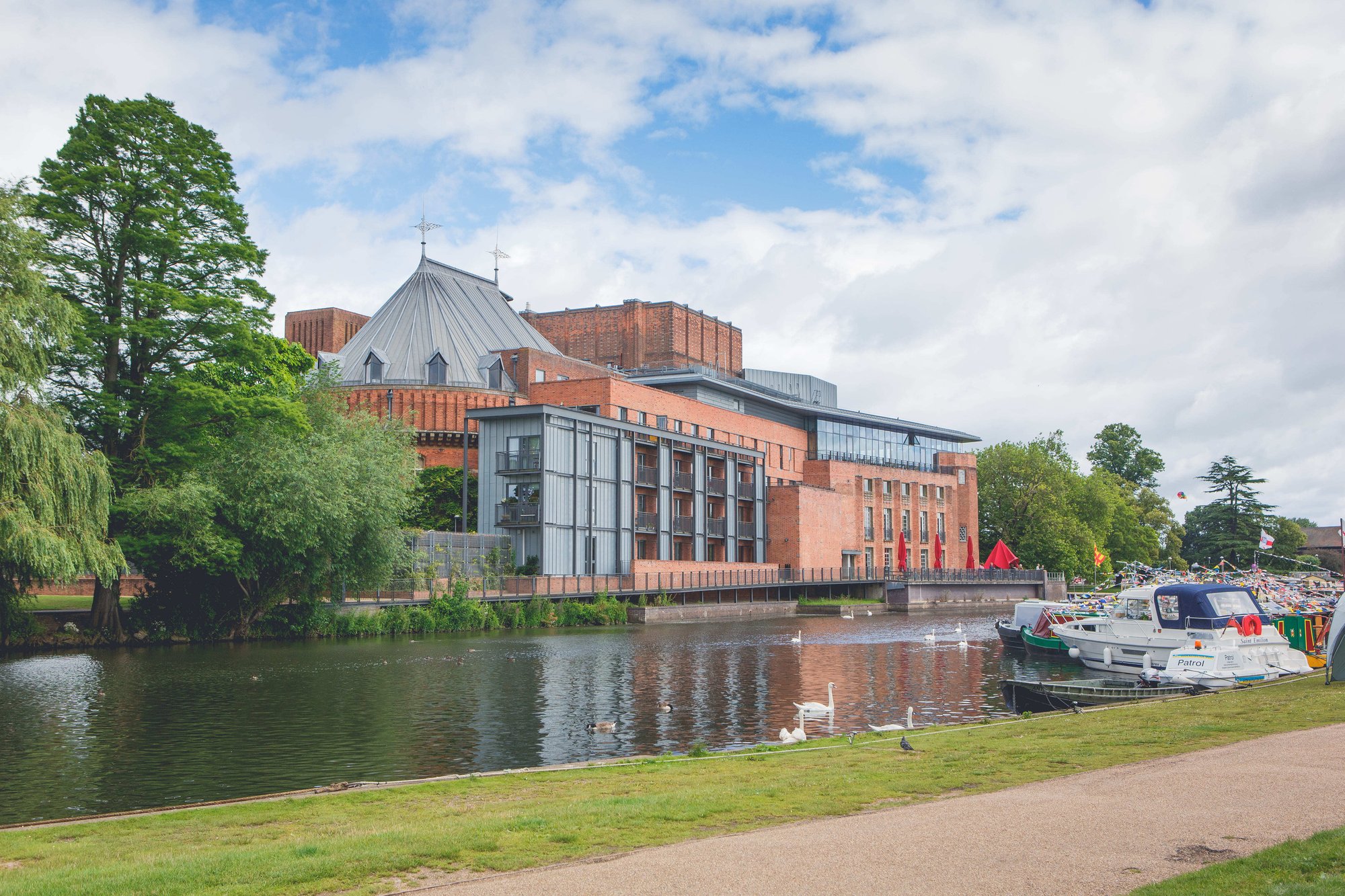
“Our main building in Stratford-upon-Avon is home to two auditoriums, a shop, a Box Office and a restaurant with commercial kitchens, meaning we’re responsible for a variety of different services on site including HV, compressed air, HVAC and lifts.” Wayne told us. “We look after other buildings too including storage, workshops, offices and more, as well as extensive gardens.”
"There can be highly intense periods from around 10 in the morning to 11 at night where it's ‘all hands on deck’.” Wayne added. “We can have a thousand members of the public on site, plus everyone back of house. The Royal Shakespeare and Swan Theatres are also open 7 days a week and only close on Christmas Day and Easter Sunday.”
“As we’re public facing, we’re aware that everything has to be working, safe, comfortable and doing its job front of house, but we also need to maintain those conditions backstage for our colleagues and performers.” Harry explained.
“When rehearsals are under way on stage, we of course can’t maintain assets and make noise in that area. So, it’s about fitting in the required level of maintenance to cover off all bases in all areas, all between both opening hours and performance schedules.”
Prior to Using SFG20, How Did You Determine What Maintenance Should Be Carried Out and How Often?
"Historically, we’d take the lead from senior management who advised what the schedule should be.” Harry told us.
As the estate services team grew and brought in broader experience including Wayne's prior familiarity with SFG20 from previous roles, their approach evolved.
“As a team, we’ve grown and brought in different areas of experience and expertise to ensure that we’re working in the most efficient and productive way we can. I have personal experience of using SFG20 in previous companies, so I can help support my colleagues.” Wayne added.
What Value Does Having Access to an Industry Standard Bring to Your Team?
Greater compliance confidence, contractor management, budget defence and team upskilling were all stand-out benefits for Wayne and Harry.
“SFG20 has given us the confidence that we are doing the right maintenance. We’re able to point to the legislation in the reference documents and can double check any details. We can structure our maintenance needs into statutory tasks as well as those that are business-critical, optimal or discretionary.” Harry noted.
 Using Opuz, their CAFM, Harry explained that they can see all tasks that are coming up and make a budget bid for what they need to make sure that those tasks are completed.
“Without the red, amber and green structure, we wouldn't necessarily be able to show our priorities in a way that's easy for other people to understand.” Harry said. “I also don’t think I would necessarily have the confidence or the language to question things - not necessarily to criticise, but rather to double check – if I didn’t have SFG20 to fall back on."
“Something else that I’ve noticed is that SFG20 has helped to grow our collective team knowledge base.” Wayne shared. “We use SFG20 to support the production of tender documents to help us explicitly say what we want a contractor to do, i.e. what specific requirements we have.”
What Were Your Main Reasons For Choosing Facilities-iQ?
Facilities-iQ is SFG20’s platform for accessing, tailoring and managing maintenance schedules, which integrates with the RSC’s CAFM system, Opuz.
Three factors drove the decision for the RSC to choose SFG20 and implement Facilities-iQ: efficiency, accuracy and confidence.
For Harry's team, loading PPMs without needing to verify the technical detail themselves was a significant efficiency gain.
"As long as we assign the correctly skilled team member, we can be confident that the job will be done right. We don't have to worry about whether it's correct, as you've already done that bit of work. We also definitely have more confidence that we're asking the right set of questions.”
Are There Any Specific Features in Facilities-iQ That Have Brought Value to Your Team?
“I find Facilities-iQ easy to navigate and to create our own folders for our Maintenance Regimes. When we're looking through as a team, having the reference for British standards has been really helpful.” Harry highlighted.
“I also appreciate the required skill sets next to tasks. This helps us to decide whether we have sufficient skill sets in-house or whether we need to get a contractor. The time element is also helpful, as previously, I didn’t know how long it would take to service a boiler as an example, so to be able to put in a more appropriate length of time helps us to build our records on how many hours things take.”
“Adding to Harry's point around skill sets, this can help us to build our case around how many hours a year we need someone.” Wayne explained. “We can then make that informed choice of: is that someone we want to employ or is that someone we want to subcontract out?” 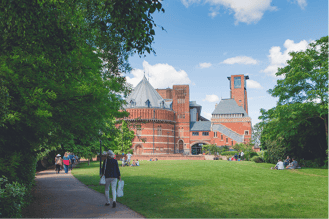
“What it comes down to specifically for me as well is that you can justify spend or justify a reason why we are required to do a certain task.” Wayne added. “When you’ve got the information easily in front of you such as a HSG document for example, it’s such a benefit.”
“Regarding our CAFM integration, as Opuz is an asset-based system, we’ve really made a point of using the asset categories that SFG20 has so it all aligns.” Harry told us.” That’s helped us to clarify that we’re talking about the same asset and applying the appropriate schedule. So, I get a lot of confidence from that.”
How Important Was the Integration With Opuz as Part of Your Maintenance Strategy?
The RSC was among the earliest adopters of the SFG20 and Opuz integration, and shared multiple points about their experience so far.
Together, SFG20 and Opuz give the RSC a practical link between recognised maintenance guidance and day-to-day delivery, helping the team plan, schedule, evidence and review maintenance activity across a complex estate.
"Without SFG20 and Opuz working together, it would just be impossible to keep track of everything. I actually don’t think we would have used SFG20 as effectively if we hadn't been able to integrate it into our CAFM system."
“As an example, we have 67 residential properties which have gas boilers – some of which also have gas hobs and gas fires. Using SFG20, we’re able to assign the correct servicing schedule to these assets in Opuz. On the CAFM, we can see the annual frequency and the dates of the last and next servicing, proving our compliance.” Harry explained.
“The allocation of frequency and criticality via the task type reassure senior management that we are providing a controlled and risk-aware servicing programme, while the Property Manager can also be confident that their accommodation is safe for tenants. This process is repeated across our commercial gas assets where we have planned maintenance incorporating the criticality, frequency and task steps. We can therefore be confident that we have a clear and auditable record of our statutory gas safety compliance across all of our gas appliances.”
Harry also noted that the ability to upload SFG20 schedules into Opuz and make edits such as removing unnecessary tasks has given the team at RSC much greater control and confidence.
"It logs where we’ve opted out of certain tasks and shows that we've deliberately made that choice because we're catering for it elsewhere.”
Again, the ability to clearly distinguish statutory and non-statutory tasks has also sharpened how the team schedules and prioritises work.
Wayne also told us that the integration has helped to improved contractor relationships, and the team is better placed to manage and challenge contractor performance.
"It's cleared up any ambiguity between what our expectations are and what theirs are. We're more informed and we can specify in a tender that we want them to observe a particular maintenance regime."
What Would You Like People to Understand About the Role of the Estates and Maintenance Team in Making Every Performance at the RSC Possible?
“I’d like people to understand that Estates and Maintenance are not just a support function operating in the background. We are a strategic partner in making every performance possible.” Wayne shared.
“Our work starts long before the audience arrives and continues long after the final curtain, ensuring the buildings are safe, compliant, comfortable and ready for performers, colleagues and visitors. That is only possible because of the dedication, skill and teamwork of our people from the maintenance team and helpdesk team to the contractors and specialists who support us. They respond quickly, solve problems quietly, plan carefully and take real pride in keeping our estate running. From keeping critical systems operational to managing assets, compliance, contractors and planned maintenance, we create the conditions that allow the creative work to happen. In simple terms, our team helps turn the lights on, keep the show running, and makes sure that everyone else can focus on delivering an outstanding experience.”
"We facilitate our creative colleagues to carry on creating, and we create the environments for them to do it.” Harry added.