


Yannis Daoutis, Compliance Manager at the University of Leeds, shares how migrating to SFG20’s intelligent software solution Facilities-iQ has fostered a more consistent approach to maintenance, strengthened collaboration with third-party contractors and boosted the university’s overall compliance standing.
About The University of Leeds
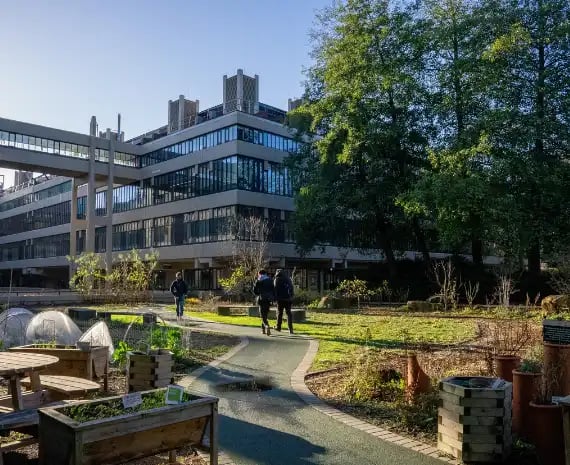
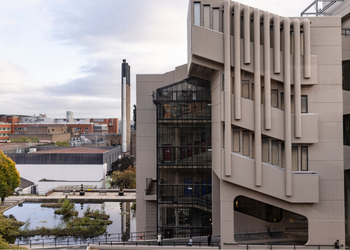
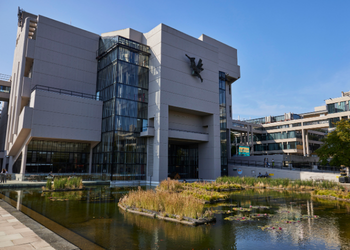
Spanning approximately half a million square metres across 360 buildings, The University of Leeds has a blend of traditional and unique academic buildings used for teaching and world-leading research.
The estate also includes a residential portfolio of nearly 6,000 student beds, off-campus sports facilities, integrated healthcare sites at two hospitals, and a large research farm.
On the ground, that adds up to around 80,000 individual assets ranging from conventional domestic boilers to one-off pieces of research equipment.
Who is Yannis Daoutis? 
Yannis is a Compliance Manager at the University of Leeds with 11 years of experience in estate management for the education sector. His remit is to set the strategic objectives for building and engineering compliance.
This involves drafting maintenance policies in line with legislative requirements and driving improvements across the university's maintenance teams.
"My key role is to advise our maintenance teams, testing their performance and driving improvements through identifying opportunities, gaps and innovative ways of working."
Prior to Migrating to Facilities-iQ, What Were the Key Challenges Your Team Was Facing?
The University of Leeds had been using SFG20 in its previous form for a number of years.
They have an internal team of subject specialists covering fire safety, water, gas, electrical, mechanical, pressure systems and more, with a strong understanding of their asset base. However, the problem isn’t knowledge – it’s consistency.
"We had the left hand and the right hand. We knew all of our assets and we knew all of the things that we needed to do, but marrying the two together to find a consistent approach to maintenance and the true recognition of what our baseline statutory requirements were as well as task prioritisation felt fragmented."
Since Migrating to Facilities-iQ, What Value Have You Seen So Far?
"A key output that I've certainly seen from migrating to Facilities-iQ is that it's enabled us to put all of our asset types into core groups and actually have a holistic understanding of what our impact and intensity looks like, and in understanding the amount of time, resource and money needed for each area. It presents information in an easy-to-digest way that’s not overwhelming.” Yannis highlighted,
“Previously, you'd see an incredibly large number or the theoretical amount of resource time required, and you'd think, how are we going to do this? But now, the way we've organised Facilities-iQ into our six core categories has really given us a greater understanding of those bite-sized chunks.”
With an estate as large and diverse as the University of Leeds, consistent visibility of maintenance and compliance requirements across assets is essential.
“We now have greater visibility of our individual areas, we can target our focus, and we can see where there are gaps in our approach, so we know where we need to focus our resource and time better now."
Another change that stood out for the university was how they approach new development and refurbishment projects.
“Facilities-iQ allows us to have a better understanding of requirements for the maintenance of future assets and areas. We can now provide that reassurance and can set that tone for principal contractors when schemes are developed. From handover, from day one, assets can be captured and maintained appropriately, straight away.” Yannis shared.
“There’s also the ability now for us to collaborate and share information to third parties. I’m able to gather that information and say this is what I’d like you to go and do.”
What Did the Migration From Legacy to Facilities-iQ Involve, and How Quickly Did Your Team Get Up to Speed?
As they were already familiar with the language of SFG20, the University of Leeds found it easy to map all of their asset types into their core categories.
"From brass tacks, working through Facilities-iQ, selecting assets and turning it into a maintenance regime happened in a matter of moments. It made things more visible and understandable very quickly." Yannis told us.
The University of Leeds set up their maintenance regime in Facilities-iQ based on their six core groups – fire and life safety, water, electrical, gas and heat sources, pressure and LEV, and lifts and building fabric – each with their own relevant internal subject matter experts.
“Facilities-iQ enabled us to map our service schedules against our structure within our maintenance function at the university. We now have a better understanding of all of our swim lanes.”
“The graphic presentation in Facilities-iQ makes it much easier, certainly for colleagues who interact with the system less often, to see headline data on statutory requirements more visibly, rather than previously having to cycle through sheets of information and trying to piece it all together."
"The onboarding process was seamless – it just happened in a matter of moments. The training packages are very useful, and if I ever get lost or forget something, the help centre feature is brilliant."
Has Facilities-iQ Reduced the Need to Manually Produce or Distribute Documents?
"It enables us to remain current and removes the risk around version control. We now have a single source of truth and can make sure that we’re working to current standards. The digital framework we now work towards is a blessing for us. It was a culture change, but we've now bought into it."
How Does the Process of Managing Technical Updates With Your FM Contractors Work?
Facilities-iQ has brought structure to how the university manages its compliance responsibilities across different risk categories, and how it stays current as standards evolve.
“We hold structured meetings with our external providers and internal teams, meeting periodically to look at how we’re performing, and any technical changes within the compliance landscape.”
Changes are assessed, accepted and pushed through their maintenance regimes directly to individual assets via the integration between Facilities-iQ and the university's CAFM system.
"Now, using Facilities-iQ to set and define our baseline requirements, we’re able to feed that to individual assets at the end, and supplementary to that, any technical changes. The integration between Facilities-iQ and the CAFM system we’re using does the heavy lifting for us now. It removes the risk of assets falling behind or us not fully understanding or capturing those technical changes.” Yannis explained.
“Now that we're all bought into using Facilities-iQ and our contractors are using SFG20, they will approach us quite often before we approach them to say there's a technical change. It's no longer waiting for me, as the lead for compliance, to drive those changes."
How Has the Wider Team Responded to Facilities-iQ?
Yannis shared that when an asset manager in his team logged into the platform for the first time, his reaction was: "I’ve just found what I needed straight away”.
Where Yannis had previously needed to guide colleagues through the legacy platform, licences are now simply issued and his colleagues are able to find their own way with ease.